

Vault Posting: A Q&A with the Creators of Andor from May 2025 (Recap)
for no specific reason

What’s written below is largely finished and untouched from when I first wrote this in June, after attending an FYC screening for Andor in May. This was part of a larger piece that eventually became dated in my mind, and I even entertained posting this before the Emmy Awards this year. As you can see, I’m slow to the take, but the conversation that the creators of Andor have had, have been having, and still are having in regards to how this series reflects very horrible, specific things happening in our country and world, are still very relevant.
This time I’m sharing this conversation after new Emmy Award Winner Dan Gilroy wrote a guest column for Deadline about Jimmy Kimmel’s abrupt firing, censorship, and warnings for what this means for Hollywood - pointing out the “crossroads” that Disney, Andor’s distributor and Gilroy’s boss, has in this larger fight for freedom of speech.
“Regardless of how the jack-booted attack on Jimmy Kimmel is resolved, this isn’t a skirmish. It’s a siege. The first thing Putin did after taking power was silence shows that criticized him. Artists are censored first because they fear us most. […] Our industry faces the most sophisticated, venomous, creeping evil in America’s history. There’s no standing above this conflict. No impartial observers. If you’re on the sidelines you’ve made a choice and must live with it.”
I also highly recommend checking out the Andor FYC Rebelión: An Andor Zine that features Mon Mothma’s anti-fascist speech, as well as the other BTS details of this fine series.
Andor
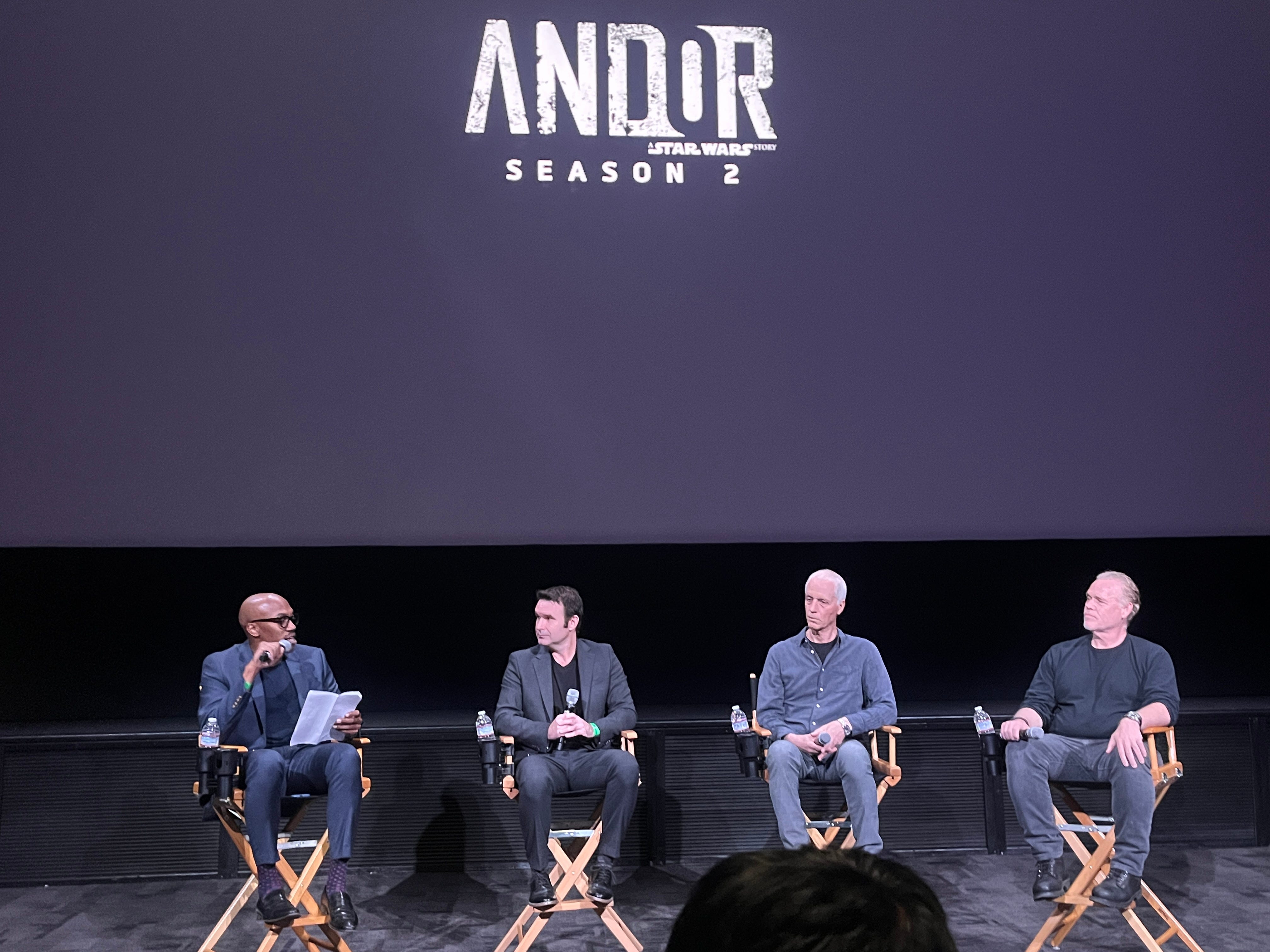
KCRW held a FYC screening for Andor season 2, showing episodes 8 (“Who Are You?”) and 9 (“Welcome to the Rebellion”) at the Disney lot with KCRW’s Sam Sanders interviewing EP/editor John Gilroy, writer Dan Gilroy, and composer Brandon Roberts after. At that time, episodes 8 & 9 had just been released on Disney+ that week, and are now the two highest-rated episodes of the series. Legitimately, some of the best Star Wars we will ever see, and such a heart-wrenching watch on a large screen. Getting to watch Andor on a big screen period, is awesome.
Summarizing the conversation: John Gilroy talks about the love and acclaim for the show after initial pushback, pleasing new and old Star Wars fans, building out the show with his brother and Andor creator, Tony Gilroy, and executive producer Sanne Wohlenberg.
Roberts talks about the importance of music in the Star Wars universe and his “fear sandwich” of following in the footsteps of John Williams, Nicholas Britell, and Michael Giacchino. He talks about now being the right age to take on the responsibility of composing the sounds of this universe:
“If ever there was a time to take everything in your tool belt out- and I will say, I had the benefit of being not in my 20s writing this because I don't think I would have had the skill set, because it used everything. But when Star Wars calls, man, you got to do it.”
Speaking about the “galactic hit” (especially here on Earth) “Niamos” is played throughout the entire series, starting at the bar Cassian walks into in the first episode. Written by Britell, Roberts was tasked with turning it into a club mix and needing to “beef it up more.” As for any inspiration, Roberts said he actively avoided trying to make it sound “terrestrial”. He further explains, “The second something sounds terrestrial, you need to do something to it to get it off Earth and into Star Wars.”
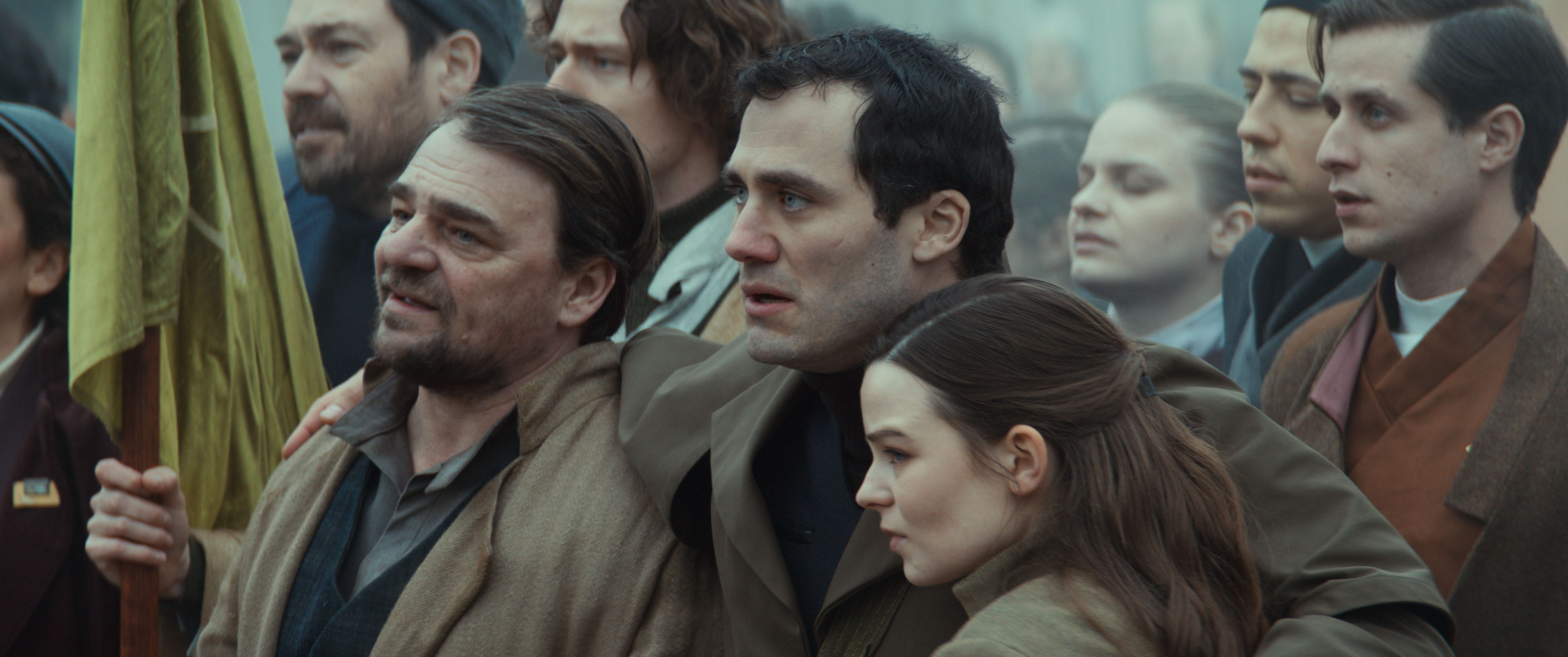
Discussing the Ghorman protest song featured in episode eight, Roberts mentions that Britell and Tony Gilroy wrote the song long before he joined Andor, with Tony wanting to make an anthem that would “make you feel ill” as the song built up to the first blaster shots. “Tony called them ‘doom bins.’ There's just this seasick feeling through the whole thing that just builds and builds until that one shot.”
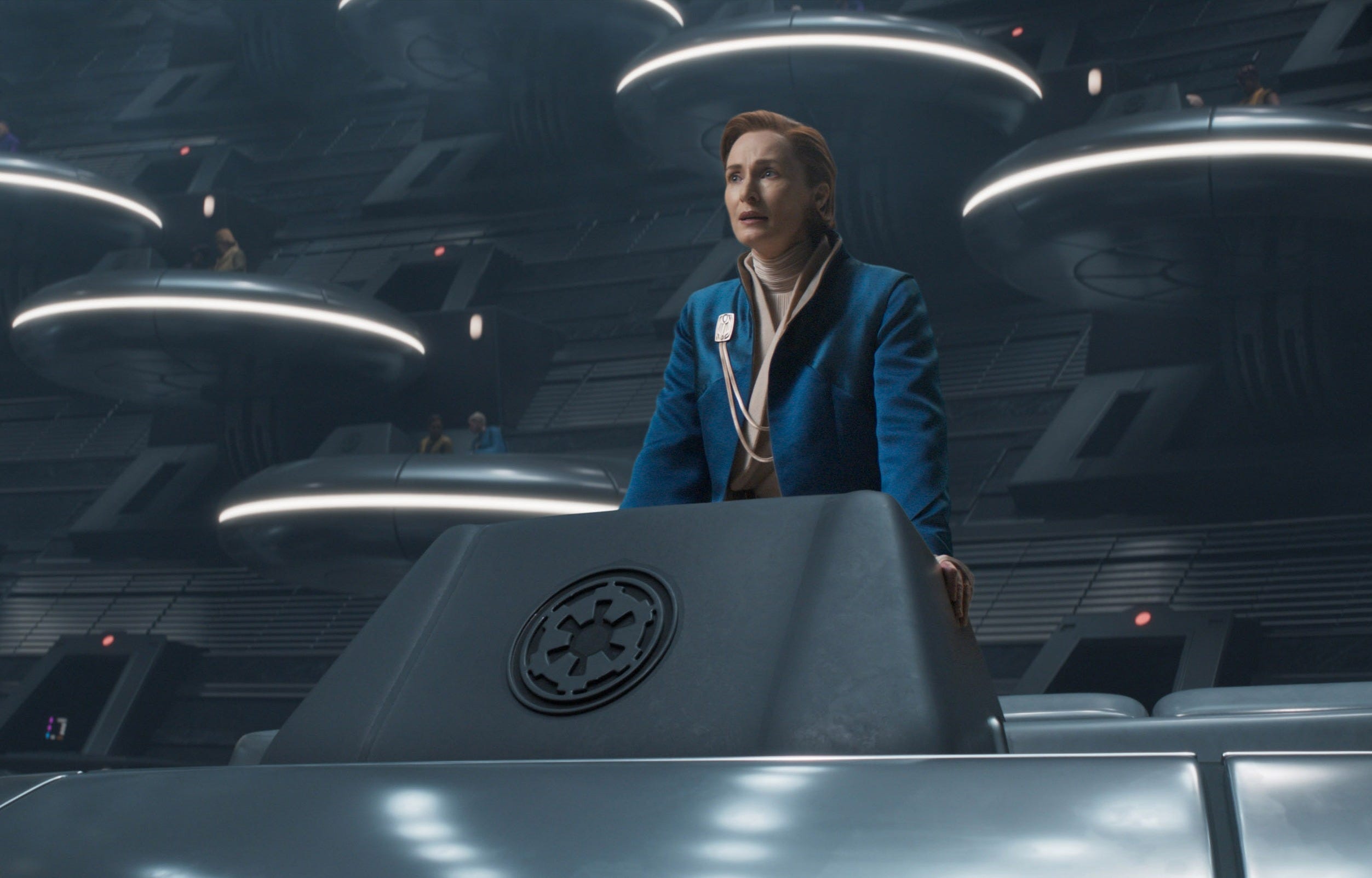
Dan Gilroy talked about writing Mon Mothma’s powerful speech:
“She knows she's talking to people. And when you're trying to transmit a message like ‘Join a Rebellion, rise up against the guard, challenge the status quo, deep down you know it's wrong.’ You need to say it in a way that that pierces that veil, because everybody's not going to respond the same way.
“She's calling it what it is, and the lines are supposed to be a dagger in the heart, because they need to be, because it's not going to respond with everybody. There's certainly many people go, there's nothing worth dying for. I don't believe that. So it was it was a blessing for me to write this episode because it allowed me to transmit an idea that there are things we're dying for. I believe that.
“If you believe that your survival and life is the most important thing in the world, you're not going to get that message. If you believe that there are things bigger than yourself, that there are things that are worth fighting and dying for, then that those words are going to resonate. So I was trying to write something that would land on somebody, and somebody would go, I need to do something now.”
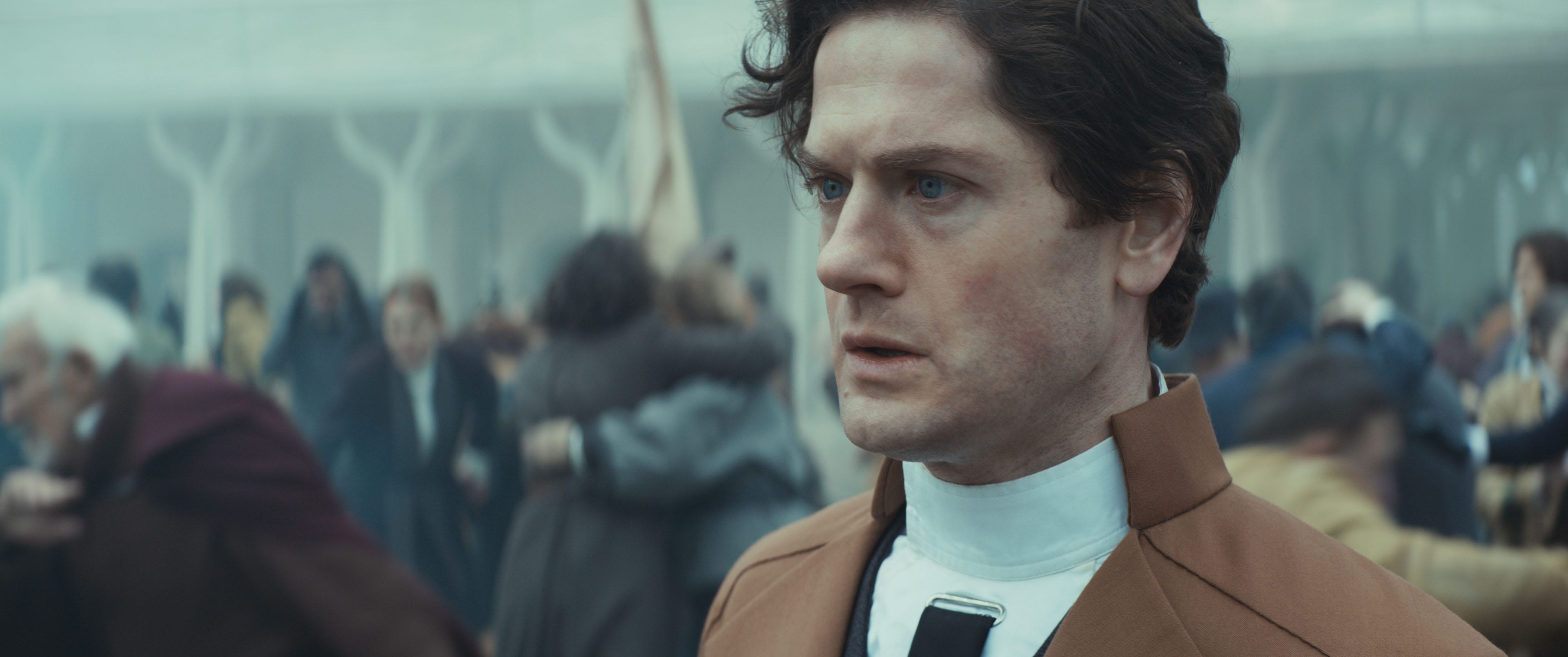
Speaking to the brutality of the massacre episode 8, Dan explains:
“We wanted to show the reality of the brutality of it, because we wanted audience members to see the reality of what authority tied with military looks like. Somewhere in the world it's going on right now. Probably more places than we want to think about.
“There's never been a year, day or a minute that that's not been going on. But this is the reality, throughout time, including the 6,000 years of Star Wars history, where this is this is what this is what it already looks like, when it really exerts itself.”
Sanders touches on audiences wanting to tie this brutality to “certain specific political and military events” happening now, and asks the creators what they think. John responds, “There's so much human history that we're drawing from.”
Dan adds,
“There's this audience, there's people that watch it five years from now, ten years from now, 50 years from now. It's going to have a different application to each person.”
I hope that this show inspires — if you're walking around and you're thinking, there's something wrong with my world, and I've reached the limit where I can't take it anymore, and I've watched Andor and I'm watching Mon's speech or Stellan's speech, that then you go, ‘I need to get up out of this chair and do something,’ then I think that's how you have it.”
Addressing the fact that it’s three Gilroy brothers working on one project, Dan reflects on their childhood upbringing in upstate New York, getting into trouble, and protecting each other. Dan continues, “You don’t have to be friends with your siblings. We were fortunate enough that somehow. We always supported each other. I don't think anyone felt in competition with each other.”
Lastly, when posed with the task of summarizing what they each think Andor’s version of hope is, Roberts acknowledged that there is hope in this series, but that it shows itself through the act of sacrifice, “What someone is giving up to try to commit to the decision to defend something they believe in. And if you want to call that hope, then you can call that hope. I call that sacrifice and commitment.”
Dan adds, “I think, ‘Why would one sacrifice?’ Because it's a belief that reaches the proportions of religion. There's a battle between light and dark that's going on. I think we dutily know there's a battle between light and dark going on constantly around us, and our hope is that light will win, and in the best of all circumstances, we somehow play a part.”
John mentions the original idea in the first Star Wars: “The whole thing is all about hope. I think what we've done with the series is we've given a much more mature, and granular, and thoughtful explanation of what it means to have hope.”
Amid current I.C.E. raids happening across the country, which started in Los Angeles a month after this Andor Q&A, it’s chilling to have these horrors continue every day, but if anything we still see hope and hears calls to action every day.